

Like all good leaders, Damita Snow gives all the credit for organizational success to her teams. She goes out of her way to make the point. Her team at the American Society of Civil Engineers recently won an ASAE award for creating a new conference. The idea was hers. “Its success was truly a team effort,” she says. “It’s an honor that reflects the dedication, creativity, and collaboration of an exceptional team.”
Snow is the director of inclusive & accessible publishing strategy, publications, at ASCE, an organization founded in 1852 and based in Reston, Virginia. In that role, she oversees accessibility standards and inclusion strategies across the organization. She also founded the ASCE’s Staff Diversity and Inclusion Council. Since June of this year, she’s served in a second role as the president of the 47-year-old Society for Scholarly Publishing, an organization that represents publishers of scholarly journals, plus librarians, editors, technologists, and service providers across the scholarly information ecosystem.
Given her diverse senior leadership roles at two organizations, we wanted to learn more about Damita and the work she does. Here’s our Q&A.
Fox Tales: You’ve served as president of the Society for Scholarly Publishing [a volunteer position with a one-year term] since June. Tell us about your priorities and goals there.
Damita Snow: Since becoming SSP president my focus has been on supporting our members, advocating for the scholarly publishing community, and ensuring SSP remains a strong, future-focused organization.
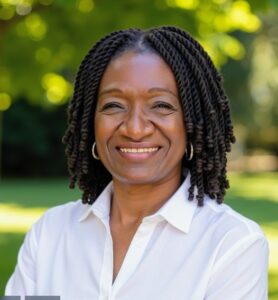
Damita Snow.
One of our early priorities was engaging on proposed OMB guidelines that could have significant implications for research funding, conference participation, and the broader scholarly publishing ecosystem. SSP has an important role to play in ensuring the perspectives of publishers, researchers, and the broader scholarly communications field are represented in these conversations and that our community has the information and resources it needs to navigate change.
At the same time, we’re strengthening SSP’s role as a convener by creating opportunities for dialogue, collaboration, and learning. Our mission is to advance scholarly publishing and communication and support the professional development of our members through education, collaboration, and community engagement. Whether through our Communities of Interest, educational programming, mentoring opportunities, or events, we’re committed to bringing people together to share expertise, address challenges, and learn from one another.
Looking ahead, I want to ensure SSP continues to support its members through uncertain times, expand its global presence, and demonstrate the value of scholarly communications. I also want to recognize and amplify the exceptional work happening across the profession through programs such as the EPIC Awards. Ultimately, my goal is to help SSP remain a trusted resource, an inclusive community, and a catalyst for innovation while advancing the Society’s strategic priorities and mission.
Fox Tales: At the American Society of Civil Engineers, you’re the Director of Inclusive & Accessible Publishing Strategy, Publications. Describe the scope of this role. If possible, give us an example of a successful initiative you’ve steered in this role.
Damita Snow: As Director of Inclusive & Accessible Publishing Strategy at ASCE, I partner across the publishing organization to embed diversity, equity, inclusion, and accessibility (DEIA) principles into the policies, processes, products, and services that shape our work. Guided by the Publications Strategic Plan, I collaborate with editorial, sales, business development, marketing, and publishing operations teams to ensure DEIA is not treated as a separate initiative, but as a core consideration in how we create, deliver, and advance publishing excellence for our communities.
A recent achievement I’m particularly proud of was creating and leading the inaugural ASCE Pathways to Inclusive Publishing Summit. The event brought together a diverse group of publishing leaders to share perspectives and engage in meaningful conversations about advancing DEIA in scholarly publishing. My goal was to create a forum where organizations could learn from one another, identify challenges, and explore practical solutions for building a more equitable and accessible publishing ecosystem.
While I developed the vision for the summit, its success was truly a team effort. Leadership immediately recognized the potential of the initiative and championed it from concept to execution. The support of our event sponsors, speakers, industry colleagues, and the entire ASCE Publishing team was equally critical. Last month, that collective effort was recognized with a Silver Award from the American Society of Association Executives (ASAE), an honor that reflects the dedication, creativity, and collaboration of an exceptional team.
Fox Tales: In your experience, what skills or qualities are essential for success in scholarly communications?
Damita Snow: I’ve often been asked a version of this question, and my answer is always the same. Curiosity is what keeps us learning. It’s what pushes us to ask questions, challenge assumptions, and explore new possibilities.
Beyond that, adaptability and collaboration are essential. Scholarly communications is evolving rapidly, and the people who thrive are those who can navigate change while building strong relationships across organizations, disciplines, and communities.
Strong communication skills and empathy are equally important. Our work brings together researchers, librarians, publishers, technologists, and many others. Success often depends on understanding different perspectives, finding common ground, and working toward shared goals.
Finally, it helps to keep the bigger picture in mind. We are all here because we believe in the value of creating, sharing, and preserving knowledge. The people who make the greatest impact never lose sight of that purpose and are willing to rethink traditional approaches to better serve the communities that rely on us.
Fox Tales: Back to scholarly publishing. What future trends do you foresee in that field?
There are several trends I see shaping the future of scholarly publishing. Artificial intelligence will undoubtedly continue to transform workflows across the research and publishing lifecycle, from manuscript preparation and peer review to discovery and content enrichment. But the real challenge won’t be simply adopting these technologies. It will be ensuring they are used responsibly, transparently, and in ways that strengthen trust in the scholarly record.
That focus on trust is closely tied to another important trend which is increasing attention to research integrity, reproducibility, and transparency. As the volume and speed of research continue to grow, publishers will play an even more important role in helping researchers, institutions, and the public navigate information with confidence.
I also believe we’ll see greater emphasis on accessibility, inclusion, equity, and global participation. The future of scholarly publishing depends on broadening who can contribute to, access, and benefit from research. That means reducing barriers for authors, reviewers, and readers while ensuring that publishing systems and practices reflect the diversity of the global research community. I also think we’ll see a shift from simply discussing DEIA principles to treating them as core measures of publishing excellence and impact.
Ultimately, while technology will continue to reshape how we work, the fundamental goal remains the same. We need to connect people with trustworthy knowledge. The organizations that succeed will be those that balance innovation with integrity and use new technologies to expand, rather than limit, participation in scholarship.
Fox Tales: How do you balance your professional and personal life? Any fun facts or hobbies outside of scholarly communications?
Damita Snow: Balance is always a work in progress, but I’ve learned that making time for creativity is essential for me. In a prior life, I was a fine artist, and I’ve always needed creative outlets that allow me to explore ideas and solve problems in different ways. Fun fact: I’ve even sold some of my artwork, and that remains one of my favorite accomplishments outside of publishing.
I also enjoy community service, advocacy work, and board service. Those interests have been consistent threads throughout my life and are closely aligned with the values that drew me to scholarly communications in the first place. Expanding opportunity, building community, and creating meaningful impact are important to me.
And since we’re talking creativity, I’ll make a small appeal to the creative people reading this. SSP’s Annual Meeting has included a Silent Auction that supports the SSP Generations Fund. If you’re an artist, photographer, crafter, consider donating a piece of your work. It’s a fun way to support fellowships, mentorships, and DEIA initiatives while showcasing the incredible talent that exists across the industry.
Fox Tales: What advice would you give someone considering nonprofit board service?
Damita Snow: Start with the mission. Board service is most meaningful when you’re genuinely connected to an organization’s purpose and can see how your experience, knowledge, and perspective can help advance its goals.
I also encourage people to approach board service with curiosity. You don’t have to have all the answers to be an effective board member. Some of the most valuable professional relationships, leadership lessons, and growth opportunities in my career have come through volunteer service. Working alongside people with different backgrounds and viewpoints challenges you to think differently, broadens your perspective, and often makes you a better leader.
At the same time, board service is a commitment. Effective board members do more than attend meetings. They come prepared, ask thoughtful questions, engage in meaningful discussions, and focus on what’s best for the organization and the community it serves.
Finally, don’t underestimate the value of your own perspective. People often think they need to check every box before serving on a board, but strong boards are built on diverse experiences, viewpoints, and expertise. If you’re passionate about the mission, willing to learn, and ready to contribute, board service can be an incredibly rewarding way to give back, build community, and continue growing both personally and professionally.